She wasn’t sure if the city was
a promise or
a punishment?
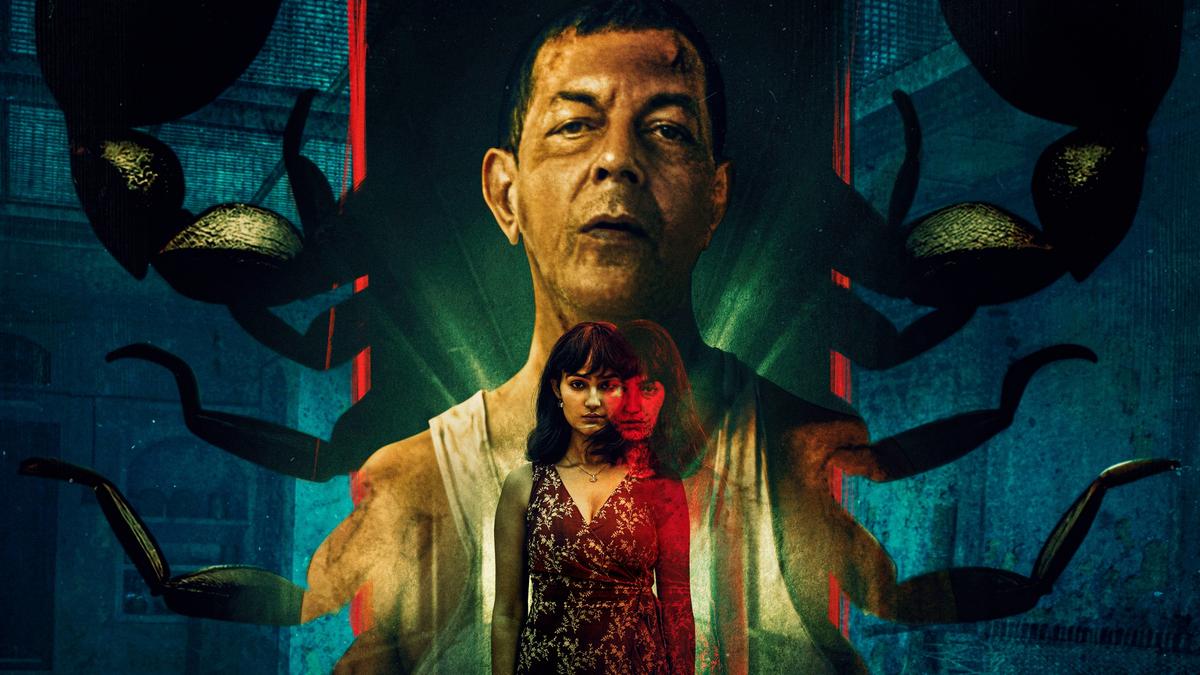
Review of Khauf by SJA
OIt begins in the hush of a city after dark, when the only music is the rumble of a DTC bus and the echo of your own heartbeat. Anu (Asheema Vardaan) steps on at a deserted stop, her figure swallowed by streetlights too distant to feel warm. No subtitles, no expository flashback—only the slow dread of being a woman alone in Delhi. In these first minutes, Smita Singh’s writing lays its trap, we watch her body learn to distrust itself. Each creak in the hallway, each flashlight flicker, becomes a question: “Am I safe in my own flesh?”.
Before the ghosts, before the blood, before the locked doors and shadows, there’s the silent contract of fear we’re all handed. Smita Singh’s writing knows this, and Khauf refuses to let you forget that real violence is more harrowing than any ghost. Its opening gambit is not gore but the truth that, in this world, fear is an inheritance you never apply for.
Six months later, the story circles back to room 333 of the Pragati Working Women’s Hostel, where Madhuri (Monika Panwar) arrives with hope still fluttering in her chest. A graduate from Gwalior seeking liberation in the capital, she carries a suitcase full of ambitions and the half‑broken faith that she can outrun her own past. Within minutes, we sense the gulf between desire and reality: the hostel gate is locked before dusk, the other women—in their whispered triads—refer to Anu’s name as if it were a curse. Komal (Riya Shukla), Nikki (Rashmi Zurail Mann), Rima (Priyanka Setia), and Svetlana (Chum Darang) move through the corridors with the suspicion of survivors. They’ll never cross that gate again.
To survive here is to haunt yourself.
What burrows into the deepest corners of fear, not to expose the supernatural, but to expose something far darker and more insidious: the way we, as women, are made to haunt our own existence just to continue. The specter in the series isn’t a vengeful ghost; it’s the quiet, suffocating weight of survival in a city where every corner hides its own horror and every gaze holds a judgment you can’t escape.
In Khauf, Delhi isn’t just a setting—it’s an accomplice.
The city’s streets, buses, alleys, and public spaces are not neutral landscapes; they are charged arenas where women navigate a constant undercurrent of vigilance. Every commute, every walk home, every moment waiting at a bus stop comes with its own choreography of self-protection: keys clutched between fingers, eyes scanning exits, headphones worn without music just to stay alert. The show makes visible the invisible labor of survival that women perform daily who desired freedom but the city gave them a cage with no walls.
Madhuri, like so many women who venture to Delhi with dreams of autonomy, finds herself shackled not by visible chains, but by the invisible, oppressive forces that pervade every aspect of city life. It’s a cage with no walls because it’s everywhere, it’s constant, it’s unspoken—yet it’s the very air she breathes. The city doesn’t just limit her; it defines her. Every step, every glance, every interaction is governed by the hidden laws of fear, shame, and survival. Khauf doesn’t indulge in obvious thrills or jump scares. Instead, it works in the shadows—shadows that grow longer, darker, and more consuming with every episode. The horror isn’t in a particular moment. It’s in the quiet, inevitable erosion of innocence, of freedom, of self.
It’s here, in this cramped boarding house, that Khauf finds its real stage. The walls, scarred by peeling paint and damp stains, seem alive—breathing in every whispered rumor about the room’s history. We learn quickly: Anu died here. Not in some grand exorcism scene, but in a manner so banal that it haunts you more fiercely than any demon. The hostel itself is both jail and sanctuary, a stand‑in for the world outside that refuses to let these women be. In a way some rooms are haunted by the women we couldn’t save. It’s of those we left behind, those we couldn’t save, those who were silenced, dismissed, ignored, and ultimately erased. The hostel becomes a metaphorical tomb for those lost women—the ones whose screams we couldn’t hear, whose stories we didn’t care to understand. These haunted rooms are not relics of past tragedies—they are monuments to collective apathy. They remind us that the most terrifying thing isn’t the ghost of a murdered man, but the guilt of knowing we’ve turned away from the ones who needed us most.
The horror in Khauf is not in the apparitions or possessions, but in the quiet moments when a woman learns to silence her own scream. The moments when she realizes that her desire for freedom is futile against the weight of the world’s demands. In every small decision—whether it’s walking home alone, whether it’s hiding a bruise, whether it’s laughing it off when she’s catcalled—there’s a scream locked in her chest. But she swallows it. She swallows it, because to survive, you must grow up, and to grow up, you must silence the parts of you that scream for help. The ghost that haunts Madhuri, that haunts all the women in the hostel, is not just Anu’s death—it’s the realization that survival requires a part of you to die. And it’s a death that happens in real-time. It happens slowly, like the growing shadow that begins to overtake her room. Because sometimes the scariest thing is not what haunts you—it’s what you become just to live.
Monika Panwar’s Madhuri anchors the series with a startling authenticity. In the first episode, she’s bright‑eyed and tentative, her laughter still free. By episode three, she’s clutching a pill bottle as if it’s the last lifeline to her own sanity, her eyelids heavy with exhaustion. When she begins to hallucinate masked men on the stairwell or wakes to a scorpion bite in the morning, Panwar doesn’t just convey horror—she embodies trauma. Every contortion of her limbs, every tilt of her head in those possession scenes is a syntax of fear and liberation, anger and surrender. She becomes a living script, her body a vessel for every woman’s silent screams.
The supporting cast rounds her in a chorus of fractured souls. Chum Darang’s Svetlana hides behind a veil of hostility; her refusal to step outside is less choice than defense mechanism. Riya Shukla’s Komal and Rashmi Zurail Mann’s Nikki share conspiratorial looks, like two crows guarding a wounded comrade. Priyanka Setia’s Rima is at once a testament to new life and a reminder that hope can be the cruelest nightmare. In their silences, in the way they flinch at the sight of an unlocked gate, these women reveal countless stories of violence visited upon them—stories the series only half‑tells, trusting you to fill the gaps.
And then there’s Rajat Kapoor, as the hakim who drifts into Madhuri’s life under the pretense of healing. His voice is soft; his gaze, unnervingly steady. He laces his remedies with both promise and poison. He never raises his voice, yet every scene with him is drenched in menace. Kapoor reminds us that the cruellest monsters are oft disguised as saviors. Sanctuary can have a price.
Pankaj Kumar (also co‑director) frames every shot with an oppressive elegance. In Khauf, light doesn’t simply illuminate—it indicts. A single bulb in a corridor becomes a spotlight on vulnerability. A shaft of morning sun falling through barred windows could be an invitation or a trap. There’s a tactile quality to each frame: the flecks of grime on the walls, the fine cracks in the hostel’s cement corridors, the glint of a broken windowpane. Kumar eschews the pixel‑perfect sheen of 4K over‑processing; instead, he lets grain and imperfection breathe. It’s akin to shooting on film—raw, unvarnished, beautifully flawed.
One of the most chilling visual motifs in Khauf is the repeated wide shot of the long, dimly lit passage, with the character standing at the far end — first Rajat Kapoor’s figure, stoic yet horrifying, and then, devastatingly, Madhu herself. The brilliance of this framing lies in how it uses space to amplify dread: the passage stretches like a wound through the hostel, the vast emptiness around the character emphasizing their isolation and insignificance. In the early episodes, Rajat Kapoor’s presence at the end of that corridor looms like an ominous authority — half-paternal, half-predatory. But by the end, when it’s Madhu who occupies that same spot, the shot’s meaning shifts entirely: she has inherited the haunted space, swallowed by it, transformed from survivor to specter. This is where Khauf delivers its masterstroke as a horror narrative — it’s not the ghost that terrifies, but the way the living are turned into ghosts by the crushing machinery of their world. That wide shot isn’t just aesthetic; it’s a visual echo of the horror genre’s oldest truth: the monster is often not the thing lurking in the dark, but what you become when you are hiding from your fears.
Editing, by contrast, is surgical. Scenes shift at the speed trauma demands: one moment, Madhuri is steady, unlocking her door; the next, a jump‑cut yanks us into a memory of violence so vivid we gasp for air. These stutter‑cuts are more than horror tropes—they mimic the way trauma circles back, unbidden, swallowing present time whole.
Sound design, courtesy of Alokananda Dasgupta, tucks under your skin. Distant sobs, the scratch of nails on wood, the sudden snap of a branch against a window, the buzing of a bee around Hakkim—each sound is dialed up just enough to make your blood churn.
Khauf’s writing excels in contrasts: the supernatural horrors of room 333 are terrifying, yes, but they never overshadow the real‑world dread that underpins every scene. For an instance, when Madhuri talks about her assault, she says she rushed home after being raped, not because she felt safe there, but because she wasn’t allowed to be out late. It’s heartbreaking — the fact that even after going through something so traumatic, her first instinct was fear of breaking a rule, not seeking help. Public buses, late‑night walks, the smile of a man who thinks a woman’s fear is part of the game—these are the true incubators of terror in this series. By the time the fire‑worship rituals and whispered incantations surface, you’ve already been conditioned to believe the specter of misogyny is inescapable.
Khauf also demands complicity from its audience. Smita Singh doesn’t shrink from depicting the denigration women face—sexual assault, stalking, female infanticide. These horrors are neither sensationalized nor moralized. They are presented as fact, as structural rot that seeps into every crevice of society. Female solidarity in Khauf is fragile, fractious, and utterly human. These women don’t just share space; they share suspicion, guilt, terror, and occasionally, fury. Their alliances shift like shadows—one moment they clench hands in sisterhood, the next they flinch at each other’s eyes. It’s a brutal reminder that when the world betrays you, even the closest bond can become a battleground.
One of the most striking moments is when Rima washing Madhuri’s top, the one marked by the assault on a public bus, and hands it back to her, almost as if trying to offer a semblance of comfort. In a world where every woman carries invisible scars, this gesture feels like a fragile attempt at solidarity. But the true nature of Rima’s character unfolds when she hands Madhuri a safety pin—a subtle symbol of protection, yet it carries the weight of her own survival instinct. Beneath the surface of kindness, Rima harbors her own agenda. As she spikes Madhuri’s tea, we see how survival often demands sacrifices, compromises, and betrayals. It’s a chilling reminder that in this world of trauma, everyone is trying to keep their head above water, even if it means sinking someone else in the process.
If there’s a single misstep, it’s in the pacing. At eight episodes and nearly fifty minutes each, Khauf sometimes lingers too long in corridors of dread without advancing its supernatural mythology. A few episodes could have been leaner, tighter. Yet in its deliberate unfolding, I found a strange solace—because grief itself is rarely neat.
Khauf makes one thing clear: survival doesn’t come with a guarantee of safety or relief. It comes with the knowledge that the battle is ongoing. You are not free. You are not safe. You are just surviving.
Where Stree played it for laughs, and Bulbbul bathed it in folk horror lushness, Khauf snarls. It refuses redemption arcs, and it doesn’t care about tidy payoffs. There’s blood, yes—but there’s also bureaucracy, mental health pills, financial precarity, and the slow grind of misogyny that’s so banal it’s almost invisible.
Khauf stands in stark contrast to other films or shows in the genre, like Stree or Bulbbul, that explore similar themes of gendered horror. Where those films find room for humor or mythical grandeur, Khauf refuses to indulge in anything so comforting. It has no illusions about redemption or miracles. The horror in Khauf is not a force that can be defeated; it’s a force that must be lived with, endured, and internalized.
Thematically, Khauf probes questions that linger long after the credits fade. What does it mean to forgive—whether it’s forgiving an abuser, forgiving yourself for surviving, or forgiving a city that watches but never intervenes? Compassion and vengeance blur. Is Madhuri possessed—or is she finally permitted to release every scream she had silenced? The series never hands you answers; it hands you fragments, trusting you to assemble the mosaic.
The show’s economy is sparse: no tidy wrap‑ups, no last‑minute exorcism that wipes the slate clean. So where does Khauf leave us? It leaves us standing in a damp corridor, heart pounding, wondering if the doors will ever truly unlock. It leaves us asking: who are the real ghosts, and who are the real survivors? Are we haunted by forces beyond our ken, or by the world we’ve built to contain fear? Is the supernatural a metaphor, or a reality we simply refuse to name?
And maybe that’s the real horror Khauf dares to show us—not the specter in the dark, not the masked face in a nightmare, but the slow erosion of girlhood into survival, the way you swallow your own scream and call it growing up.
Khauf is streaming now on Prime Video.
 THIS IS WHAT I MEAN