I met God like you meet your own reflection in a window—brief, doubled, and uncertain who appeared first. I grew up with two of them, maybe more—shaped by my father’s devout silence and my mother’s restless hands. Ours was a house crowded with rituals: some claimed, some borrowed, most inherited without translation.
He was Muslim by blood and belief. She, born Hindu, called herself agnostic—yet bowed to the Gayatri mantra like a habit she couldn’t unlearn, watched over my rozas like belief was a schedule more than a choice—and still insisted I dress with modesty “for my own dignity.” In our house, religion wasn’t just practiced. It was performed. Ramadan came with rules like rituals—no music, no eyeliner, no “western” clothes. For us, it was the kind of God who visited our home through the voice of maulanas. I memorized prayers in a language I didn’t speak and fasted before I knew what hunger meant. Faith didn’t feel like something I chose. It felt like an air-conditioned room I was locked in, no matter how loudly I yearned for fresh air. I wasn’t trying to find God. But some part of me—the part that still bowed when no one was watching—was reaching for something that could hold the weight of my fear.
Something bigger than the valley of my own mind.
And maybe that’s the closest I’ve ever come to praying. Not the one my maulana taught me, syllables tight and sharp on the tongue. Not the way my mother lit her chandan incense and never missed a Navratri, even as she told me she didn’t believe in much of anything. But something quieter. Stranger. A raw, quiet feeling. Like needing to exhale and choosing, instead, to speak to the dark. Even as a child, I couldn’t tell if I was reaching for God—or just chasing what I was told to run from. What is this motion in us that bends—not towards proof, but towards presence? What is this ache that returns, even after the prayers have left us?
Because that’s what it is, isn’t it? A reflex born not just from fear but from hope. From the deep, human urge to believe there is something more than blood and death. And what if God is not what we’re running towards—but what we run away from? What happens when we finally turn around? Because what if faith isn’t about finding comfort, but learning to live with the unease?

Like the rustle in the grass—could just be the wind. Or could also be the thing we’ve spent our whole lives running from.
So the brain, over the millennia, has learned to overreact. To assign cause where there was only coincidence. To conjure faces in darkness, voices in silence, motives in chance. Better to believe too much than to die believing too little. What began as a survival reflex calcified into the scaffold of civilization. We do not merely sense the world—we narrate it. We graft stories onto randomness, infuse objects with intention, and breathe agency into the unknown. “Man is a creature who makes pictures of himself and then comes to resemble the picture,” Iris Murdoch once wrote. The oldest portrait we ever made may well have been of God.
But abstractions alone cannot hold the weight of such an inheritance. To lend texture to theory and ground metaphor in reality, we turned to lived minds—individuals of differing faiths, philosophies, and orientations of doubt. The broader pool reflected a complex spectrum. But for clarity and thematic precision, we narrowed our focus to three distinct voices. These participants—chosen for their tonal coherence, intellectual honesty, and refusal to perform—offered insight that was not only personal, but also unusually lucid. In an era where belief is often performed for belonging or rejected for performance, theirs was a rare clarity. What emerged were not just opinions, but living metaphors—people who wear belief like weather. Some carry it like armor, some shed it like skin, and some keep it folded in their back pocket, just in case.
The Thursday Pilgrim fasts with the same ease that she feeds stray animals, and her prayers rise like steam off her kitchen pot—integrated, instinctive, and unannounced. Faith, for her, is not spectacle but seasoning: always present, rarely overwhelming. The Soft Nihilist, exacting and emotionally minimalist, refuses sentiment like a bad lyric—he is allergic to the manufactured softness that often accompanies belief. His lens is epistemic, not eschatological. And then there is Miss Ctrl+Z, a hybrid of rationalism and imaginative empathy, whose thought moves in spirals, never quite settling—but always cutting close to the bone.
Placed side by side, their reflections form a kind of triptych—three internal landscapes shaped less by doctrine than by disposition. The Pilgrim believes with the quiet certainty of ritual; her divinity is calendrical, contextual, and close. The Nihilist is perpetually deconstructing the frame itself, wary of meaning as a trap or a trick. Ctrl+Z walks between frames—disassembling the logic of meaning even as she catches glimpses of something flickering beneath it. Asked whether they had ever experienced something greater than themselves—something nameless, overwhelming, resistant to language—their responses offered a miniature cosmology of temperament. The Pilgrim declined the category entirely: transcendence, for her, comes already named. It belongs to the sacred calendar, the known divine. The Nihilist invoked knowledge itself: the vastness of what he does not know, the recursive awe of standing before infinite ignorance. Ctrl+Z, pointedly human, described an overheated train, a stranger’s small kindness, the soft relief of not fainting. It wasn’t awe, she said. It wasn’t sacred. But it stayed with her. Not all revelations arrive with thunder. Some come with a fan.
On the question of meaning—do we need it, or merely manufacture it for comfort—their answers fractured and reassembled the question itself. The Pilgrim answered with quiet conviction: “Even jokes have meaning,” she said, implying that the human impulse toward significance undergirds even our lightest moments. The Nihilist dissented: “You don’t need meaning. You need contentment.” For him, contentment—not narrative—was the deeper refuge. Ctrl+Z rewired the question altogether, suggesting that meaning isn’t innate but installed: not an instinct, but an interface. Children are not born yearning for legacy, she argued. They are taught to want it.
Even awe—long considered one of the most sacred, ineffable human responses—revealed its psychological architecture under their gaze. The Pilgrim distinguished it from beauty: awe dissolves the self; beauty steadies it. The Nihilist noted that beauty is a social construction, subject to trend and taste, but awe endures—deep, visceral, uncurated. Ctrl+Z, unflinching as ever, drew a brutal distinction: “You can be in awe of someone’s cruelty. That’s not beauty. Awe is primal. Beauty is programmed.” In her language, awe is a native function; beauty, a downloaded app. Their answers do not converge, but they rhyme. Each, in its own syntax and scale, sketches the edge of the sacred—sometimes named, sometimes negated. Even in denial, a contour forms. A need to locate oneself within something legible. A shape to fit the chaos.
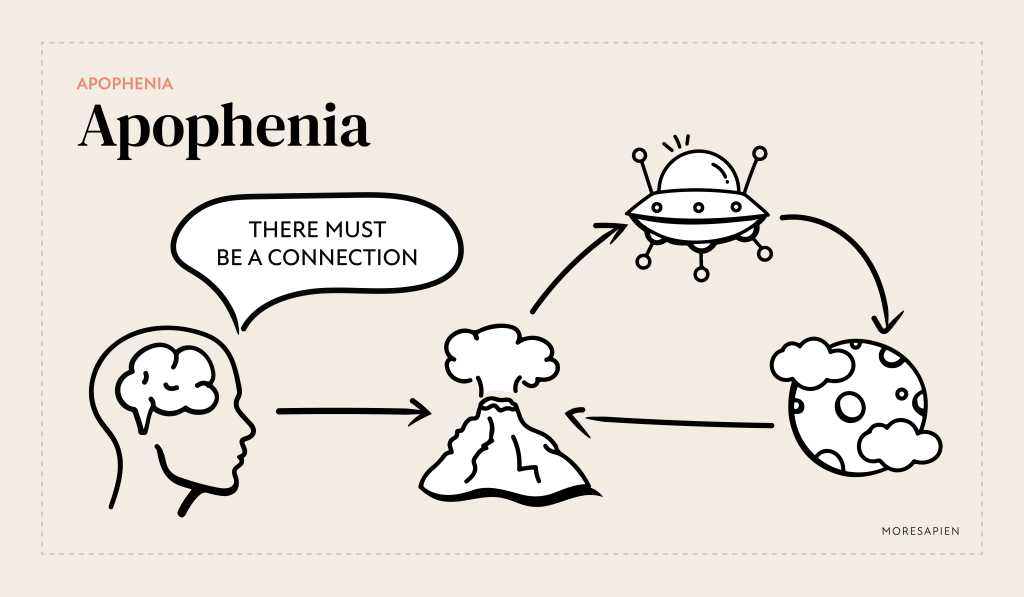
This, fundamentally, is apophenia: the brain’s instinct to impose order on disorder, meaning on mess. In 1958, psychiatrist Klaus Conrad1 coined the term to describe the early stages of psychosis—pattern-detection where none exists. But the same cognitive engine drives art, science, and spirituality. As Steven Pinker once noted, “We are pattern-seeking animals, and we are quite adept at telling stories about the patterns we think we see.
In other words, the sacred begins in the synapse. Before there were prophets, there were pattern-hunters. Before theology, an overactive nervous system. A storm wasn’t just pressure—it was punishment. A shadow wasn’t just light—something lurked in it. And so, over centuries, instinct became narrative, narrative became doctrine, and doctrine became civilization.
Perhaps what we call God, then, is not merely a metaphysical entity—but a cognitive inevitability. An emergent property of a brain desperate to explain, to protect, to belong. We didn’t just build temples—we inherited the blueprints. Every cathedral was first a neural impulse. We mapped our fears onto stars, our longings into scripture, our unknowns into gods. Not because we were wrong—but because we were wired that way.
A growing body of empirical research supports this view. For instance, Dacher Keltner and Jonathan Haidt in 2003,2 identified awe as a distinct emotional response characterized by two main features: perceived vastness and a need for cognitive accommodation. These are not limited to the divine; awe can be elicited by towering mountains, complex theories, or even profound moral acts. What unites these stimuli is their challenge to our mental models.
Studies show awe triggers self-transcendent states—reducing self-focus and increasing prosocial behavior. It inspires generosity, patience, and humility. Its physiological effects include slowed heart rate, decreased inflammation, and reduced markers of stress. Some researchers, like Alice Chirico and David Yaden, suggest awe evolved to help early humans identify safe environments or bond socially. Others, like Haidt and Keltner, argue that awe promoted reverence for powerful leaders and communal cohesion. In all theories, awe is a deeply adaptive emotion—one that reshapes perception and deepens connection.
Interestingly, awe is not only vast in its effects but varied in its forms. Keltner and Haidt outlined several “flavors”: threat-based awe (elicited by natural disasters or charismatic authority), beauty-based awe (elicited by art or nature), ability-based awe (inspired by extraordinary talent), virtue-based awe (witnessing acts of moral strength), and supernatural awe (evoking a sense of the uncanny). Across cultures, the triggers of awe vary: individualistic societies report awe from personal achievement more often, while collectivist ones more often cite interpersonal reverence. Even astronauts report a profound experience of awe known as the “overview effect”—a cognitive shift that occurs when seeing Earth from space, where conceptual vastness meets perceptual rupture. In such moments, awe isn’t decoration. It’s transformation.
This hypothesis is echoed in the pages of literature, the canon of cinema, and the ever-evolving map of culture. In Terrence Malick’s The Tree of Life, the camera lingers not only on the vastness of the cosmos but on the trembling of human grief, suggesting that the sacred resides both in nebulae and in the kitchen sink. Marilynne Robinson’s Gilead elevates mundane love to theological weight—her prose a quiet prayer to a God shaped by memory and gentleness. Even in works that do not claim belief, the impulse persists: Joan Didion’s essays, often sharply secular, are infused with the ache for continuity, the yearning to narrate grief into coherence.

This impulse—to hear meaning in noise, to glimpse god in entropy—is neither naïve nor obsolete. It is our oldest interface with the unknown, and the engine behind everything from ritual to renaissance. Even as formal religion retreats from cultural dominance in many places, its psychological scaffolding endures in new forms. The structure of prayer echoes in meditation apps. The confessional reemerges in therapy. Pilgrimage is now digital: we follow, subscribe, share. We are no longer burning sacrifices—but we are burning out.
Philosophers like William James recognized this hunger for the transcendent as less about doctrine and more about disposition. In The Varieties of Religious Experience, he argued that religious feeling—at its core—is not tethered to institutional forms but arises from direct emotional encounters with “more.” And that “more” need not be supernatural. It may arrive through art, illness, music, mortality. It may come, as poet Christian Wiman writes, “in the form of a cry.” It may come and never explain itself.
We see this refracted in contemporary fiction as well. In Kazuo Ishiguro’s The Remains of the Day, dignity becomes a kind of secular faith—an organizing myth for a man who cannot name his grief. In Fleabag, Phoebe Waller-Bridge turns the confessional trope inside out: the camera becomes both priest and god, and silence becomes a form of listening. Even in the bleakest corners of pop culture—Charlie Kaufman’s Synecdoche, New York, Lars von Trier’s Melancholia—there is a gesture toward something ungraspable, a gesture made not with hope, but with precision.

And perhaps this is the shift: from faith as certainty to faith as orientation. A willingness to look, even if nothing looks back. Simone Weil called attention “the rarest and purest form of generosity.” If so, belief may begin in attention—not to a deity, necessarily, but to the staggering fact of presence. To be alive is to be, constantly, on the brink of meaning.What we believe may be less important than how we believe—what we risk emotionally by entertaining wonder. In a disenchanted age, wonder becomes subversive. Not because it promises answers, but because it keeps the questions alive. “Tell me,” asks Mary Oliver, “what is it you plan to do with your one wild and precious life?” The question is spiritual not because it presumes heaven but because it presumes responsibility.
To long for meaning is to admit that something once whole has been fractured. Viktor Frankl’s insistence that suffering demands meaning is not a neutral psychological claim—it is an existential response to unspeakable rupture. But what Frankl renders interior, Frantz Fanon politicizes: the need to make meaning arises not in a vacuum but in the debris of colonial dislocation, historical violence, and systemic negation. The ache is not just spiritual—it is historical. To search for God, or even for a nameable sense of coherence, is often to seek refuge from the brutal dismemberment of one’s place in the world. And if, as Simone Weil puts it, “all sins are attempts to fill voids,” we must ask: who made the void, and whose body has historically been cast as its vessel?
Longing has never been apolitical. The ache beneath belief is coded through language, shaped by empire, sexed by gender, and demarcated by race. Often, absence is feminized—portrayed as lack, as passivity, as space waiting to be filled or rescued. This is not incidental. It reflects a cultural grammar in which emptiness is gendered, silence is racialized, and longing itself becomes a kind of ideological battleground. To imagine God as absence, or to yearn for presence through loss, is to participate in a legacy of meaning-making that is both metaphysical and material. We do not ache in abstraction; we ache through inherited scripts of dispossession.
The spiritual impulse becomes not a retreat from politics, but a cry formed by it. God, in this sense, is not so much a person or proposition as a placeholder for pain—a symbol stretched across the absences history leaves behind. Faith is not naïveté. It is the insistence that something might still live in the ruins.
But not all grief is permitted to speak. Not all mourning is seen as human. In many parts of the world, to grieve publicly is to invite scrutiny, and for some, to grieve at all is a political act of defiance. Yet if longing is shaped by history, grief is its rawest expression—and like all expressions, it is governed, policed, and unevenly allowed.
When I say that grief is political, I do not mean partisan. I mean that grief, in both its expression and suppression, is shaped by the distribution of power, by narrative economies, and by the infrastructures—visible and invisible—that delimit whose suffering is legible. To grieve, like to pray, but unlike prayer, which presumes a listener, grief risks silence. And still, it speaks.
Grief is not evenly distributed. Not because suffering isn’t, but because public attention is not. Emotional labour, like any other, is bounded by time, resources, and narrative permission. In this sense, grief demands allocation: we must choose what to attend to, who to mourn, where to invest our psychic and social energy. This is not a matter of sentiment, but of structure. What becomes mournable is shaped by power—by media attention, by cultural narratives, by the machinery of states and the soft violence of social norms. The apportioning of grief is no less political than the allocation of aid. To grieve is to value. To withhold grief is to devalue.
Philosopher Judith Butler once observed that the public framing of loss demarcates the boundaries of the human. Some lives, she argued, are rendered “grievable,” while others are effaced even in death. Grief, then, is not merely a private sentiment but a public act of recognition. When we grieve, we assert that something mattered. That someone mattered. And when we do not—or cannot—our silence speaks to the exclusions written into our moral imagination.
A cynic might argue that grieving is not truly allocative—that we do not, after all, exhaust a finite resource by mourning one loss instead of another. But this misses the point. Grief is not a neutral response. It is entangled with attention, with empathy, with moral priority. And in an age of digital witnessing, the visibility of grief becomes its own form of currency—traded, shared, and monetized across platforms. Grief is staged, commented upon, strategically released. Its virality becomes a proxy for its validity.
The Palestinian photojournalist Motaz Azaiza posted a video on Instagram: a dust-covered child trembles on a hospital bed, turns to another boy, and opens his palms to show the cuts. The caption read: “This is the most heartbreaking video ever.” Two million likes. A hundred thousand comments. One reads, “I am so sorry that the world is watching and not helping.”
And therein lies the paradox: we grieve collectively but act individually. We feel, we post, we scroll on. We perform recognition but do not redistribute power.
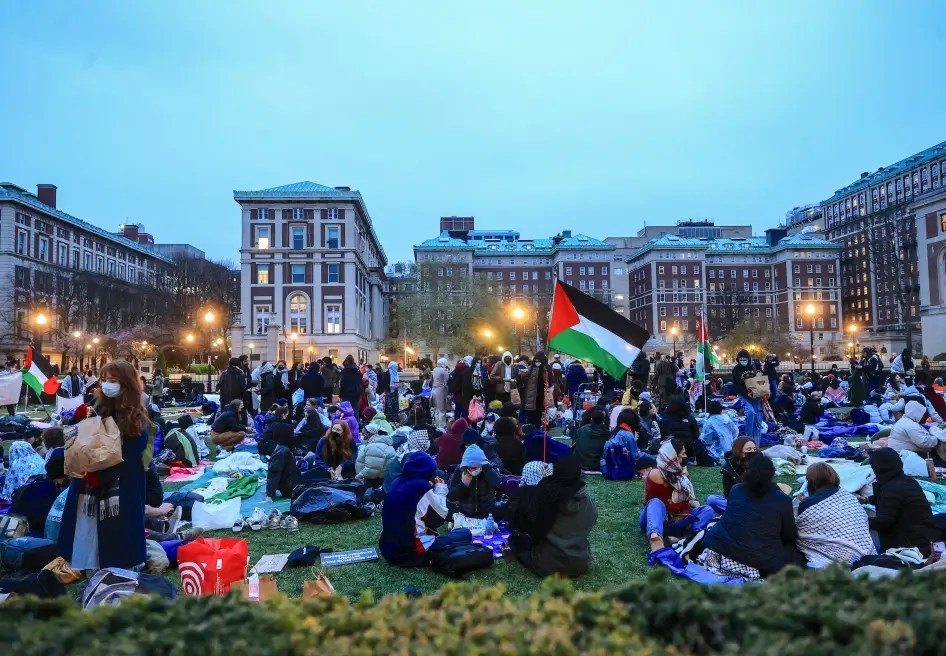
In Gaza, grief is not a luxury—it is a performance made necessary by indifference. As death tolls mount, families must mourn into the camera lens, translating loss into a language the international community might understand. Grief becomes a means of survival. Its expression is not therapeutic but strategic. As Juliet Hooker argues, grief has become the currency with which the oppressed purchase solidarity. But this economy is inherently unstable because it is built on spectacle. And spectacle has a short shelf life.
If political attention is fueled by affective intensity, what happens when the images blur together? When the corpses become statistics? When the child in rubble is replaced by the next child in rubble? The question is not merely moral but epistemic: what kind of knowledge does spectacle produce? And what kind of forgetting does it enable?
Activism sourced from grief must be careful not to commodify the very suffering it seeks to end. The danger lies not in feeling too much, but in feeling only in response to the extraordinary. Juliet Hooker reminds us that grief, while potentially galvanizing, can also obscure. If we only recognize injustice when it is made catastrophic, we overlook the ordinary violence that defines so many lives.
Grief must be understood not merely as emotional fallout but as moral critique. It reveals where the assumptive world has ruptured—where our basic convictions about safety, fairness, or belonging no longer hold. The continuing bonds framework in bereavement psychology reminds us that relationships do not end with death; they transmute, haunt, and therefore continue. So does political grief—persisting across generations, sedimented in memory, identity, and resistance.
Grief, for a Muslim in India, is not simply felt—it is policed, politicized, and parsed for signs of dissent. To be a Muslim in India today is to grieve under surveillance. Grief is not afforded the luxury of spontaneity; it must be mediated, measured, and stripped of excess, lest it be mistaken for protest, or worse, threat.
During wartime spectacles and communal flashpoints, Muslims must prove not only their grief, but the manner in which they grieve—“correctly,” “patriotically,” and always with one eye on the nationalist gaze. When the officer looked at me during the war-like curfew and asked, ‘Aap Mohammedan ho?’ it wasn’t just suspicion—it was a mirror; I remembered how, time and time again, classmates, colleagues, even friends would ask the same, and how reflexively I’d begin to explain—‘My mother’s Hindu, actually’—as if clarity could protect me, as if identity needed a footnote. The word “Muslim” itself has become a dog-whistle, a cautionary prefix—a Muslim man, a Muslim shooter, a Muslim protestor—as though identity alone constitutes evidence.
This is the strange double bind of being a liberal Muslim: you are expected to grieve the violence perpetrated by your co-religionists more vocally than the violence done to your own, to condemn both Muslim fanatics and Hindutva lynch mobs with equal ferocity, and to demand accountability while also being treated as suspect. One must simultaneously guard personal freedoms and serve as a proxy ambassador for a vilified community. The pressure is not simply to mourn, but to mourn in ways that are digestible to the majority—grief stripped of its complexity, its anger, its roots.
When a Black mother grieves her lynched son in the early twentieth century, and when another mourns her son murdered by police a century later, the continuity is not just familial but political. Their grief is not isolated—it is ancestral. It is structural. And yet, to grieve politically is not only to look back. It is to risk hope. It is to insist that the world be otherwise. In this sense, grief can be a blueprint for solidarity—not one that demands spectacle, but one that honors the full spectrum of loss. Not only death, but the slow abrasion of dignity. The erosion of the assumptive world.
To grieve, then, is not to retreat into sorrow, but to expand the perimeter of what we recognize as worthy of care. It is not a detour from politics—it is its very engine. Because what is grief, if not love—interrupted? And what is political love, if not the refusal to accept that interruption as final?
If grief stretches outward—toward solidarity, history, and the structures that wound—then longing often turns inward. Not away from politics, but into the psychic space where politics has already etched itself: the self.
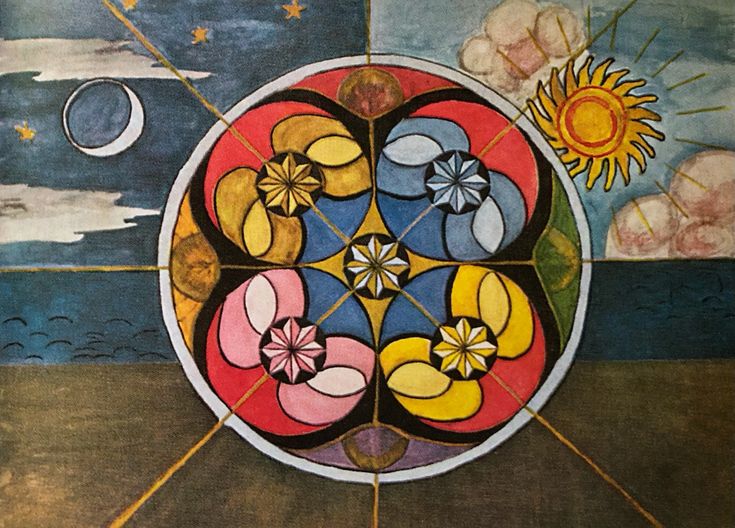
Traditionally, the spiritual journey has been coded masculine. Carl Jung’s archetype of individuation—so often referenced in modern mythmaking—unfolds as a narrative of conquest and coherence, in which the self is forged through heroic integration of the unconscious. But this map privileges domination over dialogue, hierarchy over hybridity. Where, in this schema, is the feminine Self—not as anima, muse, or mirror, but as autonomous axis? What does it mean to reimagine the journey not as mastery of the shadow, but as reckoning with inherited fracture?
The inner cathedral is not made of pure soul. It is tiled with colonial residue, gendered silences, caste trauma, and diasporic echoes. To speak of the self without history is to speak in myth—but not the kind that liberates. As Gloria Anzaldúa insists in Borderlands/La Frontera, the self is a site of crossing and contradiction—a nepantla space where multiple, often conflicting, identities collide and coalesce. The postcolonial psyche, as Ashis Nandy observed, is not merely dislocated—it is overwritten. Meena Kandasamy echoes this in her work on memory and resistance, where the female body becomes both the battlefield and the archive. To confront oneself honestly, then, is not to excavate some essential core, but to recognize the palimpsest.
In this view, individuation must be decolonized. The sacred center cannot be “found” until we name what buried it. As Bayo Akomolafe writes, “The times are urgent; let us slow down.” Slowing down allows the self to be reconstituted—not as linear progress, but as ritual return. It makes room for what Christina Sharpe calls “wake work”: the labor of attending to the afterlives of slavery and empire—the unfinished griefs that echo through Black and Brown lives. Indian Dalit poet Chandramohan S frames the inner voice as resistance: “This tongue was cut before birth,” he writes, yet it speaks still. The self is not immune to these inheritances—it is shaped by them.
What if the process of selfhood is less a return than a reconstruction? The Ship of Theseus becomes more than a paradox; it becomes an ethics. For queer and trans lives especially, identity is not continuity—it is choreography. Susan Stryker reminds us that trans embodiment is not a metaphor—it is material resistance to being made invisible. To carry the sacred in a body that has been cast as an aberration is not merely spiritual. It is revolutionary.
To claim the self as experience rather than static form is to dethrone the metaphysical binaries that have long ruled religious and psychological canons. Akhil Katyal’s poetry resists this too, naming queer love in Hindi, in Urdu, in English—languages that have all been used to erase it—and making space instead for coexistence, ambiguity, and longing.
This is where Simone Weil’s attention becomes urgent. “To be rooted is perhaps the most important and least recognized need of the human soul,” she wrote. But what if the soil itself is contested? For those living at the intersection of empire, gender, caste, or queerness, the root must be grown in exile. Audre Lorde’s mandate—”The master’s tools will never dismantle the master’s house”—reminds us that we must remake the architecture of the self from the ground up, not renovate within the confines of oppressive myth. Meena Kandasamy insists that spiritual becoming cannot be separated from political clarity. Akhil Katyal’s lyricism reclaims the intimate as insurgent, while Chandramohan S’s Dalit theology demands that we name not only the divine but the violence done in its name. Maya Sharma’s documentation of working-class queer women’s lives in India, especially in Loving Women, collapses the boundary between the spiritual and the everyday—showing that divinity can reside in survival, desire, and domestic resistance.
To meet the self is not only to descend inwards, but to sift through inherited ruins—colonial shame, caste and communal trauma, theological exclusion. The inner cathedral, then, is not a sanctuary untouched by the world. It is where the world is metabolized. Where history echoes in personal grief. Where myths are rewritten, not erased. Where silence, as Trinh T. Minh-ha reminds us, is not absence, but presence under threat.
To believe in the self—at full resolution—is not narcissism. It is a political act of reassembly. A declaration that the divine is not above us, but within reach. That to be fragmented is not to be broken. That attention, as Weil knew, is not only spiritual—it is ethical. And that the echo we hear in the stillness might just be our own voice, returned to us at last, unmuted.
If the inner cathedral is where the self is reconstructed—layer by layer, with memory, politics, and pain—then silence is its vaulted ceiling. It holds what cannot yet be named. After the work of reassembly comes the hum that remains: a soundless theology, a sacred withholding. If the self is shaped through presence, it is also shaped through its limits—what we cannot say, what we choose not to say, what has been taken from us to say.
When I was a child, I was told that words have power. Ayats could protect you. Stories could trap you. Silence, too, was a kind of worship. I didn’t understand then that all of this—language, longing, listening—wasn’t just religion. It was literature. Myth dressed in modesty. Meaning unfolded into ritual.
For many Muslim women in India—raised within the dual surveillance of state scrutiny and patriarchal piety—silence is not always a choice. Yet it is sometimes the only protection. It is not surrender, but strategy. It is what dignity sounds like when speech has been weaponized.
Who gets to define God, after all? Whose silence is heard as sacred—and whose is read as guilt, apathy, or defiance? The language of empire has long demanded translation, submission, clarity. But the divine does not always roar. Sometimes it simply refuses to explain itself.

In traditions like Sufism, silence is not passivity but depth. Ibn Arabi wrote of the heart’s subtle movements, of divine truths that language only distorts. Zen Buddhism reveres the wordless transmission of insight—the “mu,” the empty cup that must be emptied again. These traditions understand what Western psychology too often pathologizes: that silence can be a form of presence, not its lack. A refusal to reduce grief to palatability, or identity to definition.
In a nation where queer Muslims often live in the quiet interstice between unspeakability and spectacle, silence becomes not absence but archive. It holds the weight of what cannot yet be said without violence. Arundhati Roy, in Field Notes on Democracy, reminds us: “There’s really no such thing as the ‘voiceless.’ There are only the deliberately silenced, or the preferably unheard.” The danger lies in how silence is read. For queer Dalit writers like Dhrubo Jyoti and Chintan Girish Modi, silence is often imposed—not because they lack stories, but because their bodies are not seen as legible vessels of meaning. Even when they speak, their words are filtered through the dominant caste gaze. And so silence, paradoxically, becomes the truer archive: a place where refusal itself is a record.
For Muslim women especially, silence is often interpreted either as repression or rebellion—never as contemplation. When a hijab-wearing woman chooses not to explain herself, it is seen as defensiveness. When she grieves quietly, it is seen as duplicity. Silence, in this context, is not a void—it is densely populated. With stereotype, with surveillance, with sacred intention. The divine, here, is not located in speech but in its interruption. As feminist scholar Leela Gandhi writes, “The refusal to speak may be the only form of speech left to the subaltern.” Silence, then, becomes the last sanctuary. Not an erasure, but an insistence that the terms of presence must be changed. That to exist outside of explanation is also holy. To sit with silence—to let it stretch, echo, and alter the room—is to resist empire’s tempo. To decolonize the spiritual imagination is to reclaim the right not to narrate pain for public consumption. To be ineligible for power is not always a loss. Sometimes it is freedom.

If God is absence, perhaps belief is the structure we build around that absence—not to fill it, but to survive it.
For the Thursday Pilgrim, belief is an ice mansion in a snowfield: beautiful, fragile, and always on the brink of collapse. It shelters—but never for long.The Soft Nihilist asks why belief must be architecture at all. To them, belief is human-shaped, not temple-shaped—messy, lived, internal. Not a monument, but a pulse.Miss Ctrl + Z, the gentle skeptic, sees belief as a clearing in the woods—soft, non-committal, a place you can enter or exit without judgment. It does not demand you stay. It simply offers rest. Absence, then, is not the opposite of God. It may be God. Not the God of thunder and decree, but the one who waits in the space between thoughts. The one whose name trembles just behind your tongue. The one who comes, not in answers, but in refusal. Refusal to be known too easily. Refusal to be made into spectacle. Refusal to be anything but holy.
If silence is the space where the divine withdraws, then story is how we coax it back into presence. What absence cannot articulate, narrative attempts to name. And just as silence is shaped by power—by who is allowed to remain unheard—so too is story shaped by those who are allowed to speak. For many, especially women, queer people, and religious minorities in India, story becomes a survival technology: a way to rewrite what history omits, to remember what the state erases, and to mythologize what could not be lived out loud. If absence is rebellion, then myth is reclamation.
If absence is the space where the divine withdraws and silence the language of resistance, then myth is the architecture of power. The stories we are told—and those we are forbidden to know—form the scaffolding of national memory. In India, myth is not confined to temples or epics. It is smuggled into textbooks, policies, and museum plaques. It is statecraft dressed as scripture.
In 2020, UP Chief Minister Yogi Adityanath renamed the under-construction Mughal Museum in Agra after Shivaji Shahaji Bhonsale—a 17th-century Maratha king reimagined by Hindutva forces as a Hindu avenger fighting against Muslim tyrants. This symbolic renaming was not an isolated act but part of a larger cartographic project: the remapping of India’s history to reflect a Hindu nationalist vision. The NCERT (National Council of Educational Research and Training) simultaneously removed chapters on evolution, Mughal rule, Islamic architecture, and Gandhi’s commitment to Hindu-Muslim unity from school textbooks, under the pretense of “rationalization.”The deletions include not just abstract concepts, but concrete histories: the Delhi Sultanate, Akbar Nama, the Gujarat pogrom of 2002.
This is myth as political strategy. Dashavatar—Vishnu’s ten incarnations—is now offered in place of Darwin, and creation myths are framed as scientific fact. As Surendra Jain of the Vishwa Hindu Parishad claimed in 2019, “The theory of Dashavatara is within the bloodstream of Hindus, so it must be taught in schools… We have found proof of Dashavatara… It is not just mythology, but history.” What we see here is not a conflict between religion and science, but between plural knowledge and singular authority. Nationalism, like religion, requires founding myths. But unlike religion, it enforces them through state machinery. In this regime, Muslims become invaders, queerness is rendered invisible, and dissent is cast as betrayal.
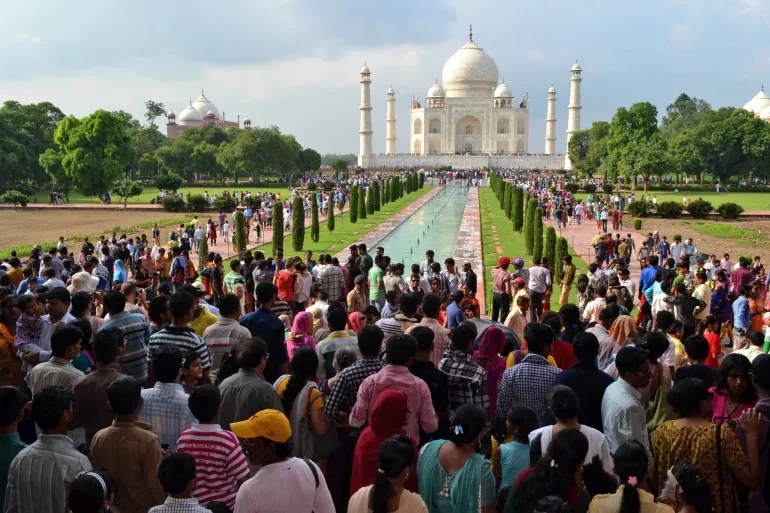
By elevating Hindu epics into nationalist doctrine, the state not only sanctifies its majoritarian project—it erases the polyphonic, contradictory, and often subversive nature of the stories themselves. Figures like Ram and Krishna are stripped of nuance and reassembled into icons of moral clarity and martial masculinity. The fluid, often erotic, sometimes ambiguous stories of Indian cosmology are weaponized into binaries: us versus them, purity versus pollution, nation versus traitor. Dalit and Bahujan retellings—from Kancha Ilaiah’s critique of Brahminical supremacy to Gogu Shyamala’s oral counter-histories—disrupt this sacral order, insisting that who gets to tell the story is as political as the story itself. As Leela Gandhi has argued, the ethics of difference that once animated India’s intellectual life are now replaced with a politics of sameness—one language, one God, one history. But the stories that survive in memory, in margins, in underground archives and queer resistance, tell us otherwise. That God, like nation, is not a fixed origin—but a contested inheritance.
Western mythologies are no less complicit. Joseph Campbell’s Hero’s Journey—canonized in everything from Hollywood to self-help—is deeply masculinist and individualistic. It celebrates conquest, resolution, and return. But what of those who do not return? What of myths that are cyclical, collective, unresolved? As Maria Tatar argues in The Heroine with 1001 Faces, feminine-coded narratives often resist closure. They linger. They endure. They do not conquer—they survive.
And survival, in many traditions, is a sacred act. Liberation theology in Latin America read the Bible not through the eyes of empire, but from the perspective of the poor. Black theology in the United States, articulated by thinkers like James Cone, reclaims Jesus as a lynched Black man—a figure of radical resistance, not docile piety. Indigenous cosmologies across the Americas, Africa, and South Asia were nearly eradicated by colonial religion, yet many persist—carried in oral traditions, ceremonies, and the deep time of land memory. In Decolonising the Mind, Ngũgĩ wa Thiong’o reminds us that language is not just a tool—it is a battleground. To tell one’s story in one’s mother tongue is a revolutionary act.
Myths can erase—but they can also liberate. They can obscure violence or expose it. The story of Adam and Eve was used to justify patriarchal control—but it has also been reclaimed by feminist theologians to explore knowledge, choice, and exile. The Qur’an’s emphasis on storytelling (qasas) is not incidental: it is through narrative that moral complexity is conveyed. For queer Muslims, reclaiming these stories means not only reinterpretation but re-enchantment. Writers like Kazim Ali, Saleem Kidwai, and Samar Habib show how the divine can be encountered through the margins—through longing, rupture, and even contradiction.
Who, then, is God, if not the protagonist of our collective imagination? But this protagonist shifts depending on who tells the tale. When gods are made in the image of emperors, they bless conquest. When gods are remade by the colonized, the queer, the dispossessed—they bless endurance, laughter, subversion.
To believe in God as story is to recognize that belief itself is narrative. That history is not a neutral record but a contested script. That every sacred text, every national anthem, every bedtime fable, carries within it the tension between what happened and what is claimed to have happened. Myth is never innocent. But in the hands of the marginalized, it can become a weapon against forgetting. It can be remixed into resistance. We invent God, yes—but not arbitrarily. The gods we choose to center, to praise, to fear, shape the architecture of our world.
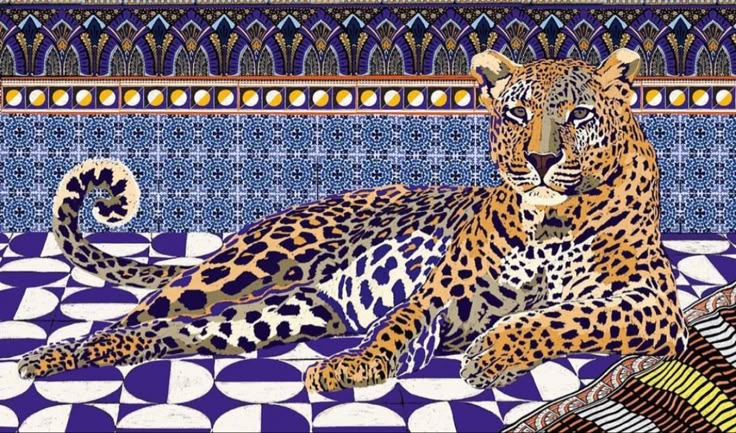
Even silence—its textures, its associations—splits along similar lines:
The Thursday Pilgrim sees it as “sadness caused by solitude… a soldier who went to war and is the only one who survived… a child abandoned by his parents.” The Soft Nihilist experiences it as void: “No image… it would be a dark place.” Miss Ctrl + Z sees silence as sanctuary: “I have this ongoing fantasy… I have just woken up from a nap, it’s drizzling outside and I have a cat napping… maybe sitting on the side of a still water body or a stream.”
In these sketches, God as story, structure, or stillness is not just a metaphysical inquiry. It is a matter of memory, mood, and survival. We do not all hear silence the same way. We do not all stand inside myth on equal ground.
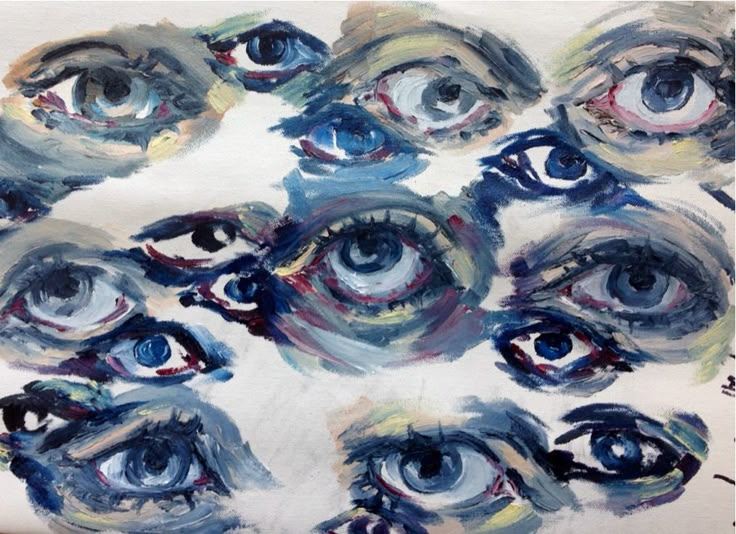
We did not stop worshiping. We just moved the altar. Away from temples and toward timelines. Away from scripture and into scrolls. If the old gods thundered from mountaintops, the new ones stream in high-definition—on YouTube, on Instagram, on Twitch. Their miracles are engagement metrics. Their commandments are monetizable.
Take Instagram. The influencer is our new demigod, their follower counts sacred metrics, their morning routines scripture. Aesthetic is morality. Skincare regimens become rituals of redemption. “That Girl” is not just a lifestyle; she’s a digital saint—glowing, disciplined, ever-productive. This isn’t satire. It’s liturgy.
Influencers, tech moguls, lifestyle gurus: these are the new pantheon. They are canonized not through revelation, but through reach. Visibility has become virtue; virality, the new sacrament. The algorithm is not just a tool—it is priest and prophet, shaping whom we see, what we desire, and what we are taught to love.


In this economy of attention, belief becomes a transaction, not a transformation. This is capitalism not as system, but as spirituality. Platforms do not merely sell products—they offer meaning. They curate aspiration, simulate intimacy, and discipline the self through optimization. The wellness coach who preaches clean eating and chakra alignment is not so different from the televangelist. Both promise salvation—one in this life, the other in the next. Both are selling belief systems, but only one is honest about the price.
Enter the self-help bro-phets: men like Jordan Peterson or Andrew Tate, who package masculine anxiety as gospel and turn followers into faithful disciples. Their sermons? YouTube rants. Their temples? Patreon and X. Their holy texts? Clips that preach ‘discipline,’ ‘truth,’ and ‘alpha dominance.’ Digital worship reproduces analog hierarchies. Men gain godlike charisma through voiceovers and stoic reels. Women? They’re muses—desired, adorned, but rarely heard. Even in the soft-boi era, vulnerability is performance art, and authenticity an aesthetic category. On TikTok, the sadboy playlist is its own genre of sermon.
Parasocial devotion—worshipping those we will never touch—repeats the dynamics of older theologies. The millionaire demigod is omnipresent but unreachable, intimate but untouched. The follower offers attention, emotional labor that always turns into money. In return, they receive proximity to meaning, to glamour, to something larger than the self. Steve Jobs’ old turtlenecks now rest in museums—relics of modern sanctity. Biohackers fast for spiritual optimization. Silicon Valley monks meditate with heart rate trackers. Here, transcendence wears a Fitbit.

Even digital aesthetics have their own theology. The gospel of minimalism, the gospel of hustle, the gospel of “clean girl” purity—each with its commandments and sins. To be messy, to be non-productive, to log off, is to commit apostasy. We’re told to curate our lives like we curate our feeds. Pinterest spirituality (think: moon water, crystal cleansing, zodiac memes) has rebranded the occult for the algorithm. Mental health influencers post affirmations like psalms. Therapy speak becomes sacred language: “boundaries,” “triggers,” “inner child.” Apps sell serenity by subscription. The self is no longer healed in private—it’s optimized in public.
God didn’t die. He rebranded. And now he’s on YouTube, trying to sell you protein powder, a mindfulness course, and a dream lifestyle—all for 20% off if you use code: BELIEVE20.
But eventually, the ring light burns out. The code stops working. Your cart stays full, but something emptier settles in your chest. You’ve tried the five-step guides to transcendence, the twelve-week plans for inner peace.
You’ve manifested, journaled, and optimized. Still, the ache remains.
So what if—just what if—the point was never to reach it?
The reach is not for God, but for each other. And in that reach—in the holding, the trembling, the not-letting-go—we find something holy.
We are told to seek. To strive. To knock, and the door shall open. But what if the door was always a mirror? What if the pursuit of God was never a pilgrimage, but a performance—architecture built not to reach the divine, but to survive its absence?
We begin, perhaps, not by seeking God—but by chasing the very things we were taught to run from.
To stay with that flicker is a political act. In Staying with the Trouble, Donna Haraway invites us to “make kin,” not gods. And maybe that’s the point. Maybe we stop searching for the omnipotent and start building kinship with the imperfect. With the broken, the unfinished, the still-becoming.
To wonder is to risk vulnerability in a world that prizes control. It is to admit we do not know—and that we may never know—and still choose to stay in the room. Under capitalism, curiosity is monetized. Under patriarchy, it is disciplined. But real wonder refuses to produce, refuses to conclude. It lingers. This is why wonder is subversive. Because it cannot be measured, sold, or optimized. As Sara Ahmed writes in The Promise of Happiness, dominant scripts punish those who deviate from normative joy. To wonder is to stray. To not know your place. To imagine something besides the present arrangement of power.
In this way, wonder is not separate from resistance. It is resistance. It keeps questions alive in a world addicted to finality. It interrupts linear time with spiral memory, imperial certainty with ancestral dream. A grammar of longing carried in our silences, our rituals, our refusal to forget. We don’t worship because we are certain—we worship because something inside us still remembers. God may never have been a destination. God is what seduces us into movement. Into myth. Into making meaning out of motion.
And what happens when we stop looking? The sky doesn’t fall. But the noise thins. The hunger quiets. Not because it’s fed, but because we’ve learned to sit with it. Sometimes, the thing we chase is the very thing we’re running from—closure, control, the illusion of mastery. Wonder interrupts that. Refuses to conclude. We don’t always grow stronger by turning toward the wound. Sometimes we just learn its shape. Learn how it limps beside us, sleeps under our bed, wears our name. We do not always heal. But we begin to see clearly.
And that, too, is a kind of miracle. Facing things we run away from.
You can’t decolonize what you refuse to face. The monsters we imagined at the margins have long since moved inward—into our myths, our mirrors, our maps of self. Refusing to look doesn’t unmake the monster. Sometimes, it just gives it more names: tradition, safety, progress. And grief—especially political grief—doesn’t dissolve when silenced. It embeds. And it waits for us at the very point we turned from it. Even God, perhaps, is just the name we give the ache we finally dared to face. Not a being, but a return. Not an answer, but a willingness to stay with the wound long enough for it to become something more than pain. And maybe that is all what belief is-a circle where we end up face to face with what first sent us fleeing.
In the end, when we confront what we’ve buried—grief, desire, contradiction—we do not become heroes. We become visible. The monster was never waiting at the edge of the forest; it was pacing the rooms we locked from within. Perhaps the only miracle is this: that we keep moving forward, even when the path loops back to the very place we began—chasing things we run away from.
Written by SJA
- Mishara AL. Klaus Conrad (1905-1961): delusional mood, psychosis, and beginning schizophrenia. Schizophr Bull. 2010 Jan;36(1):9-13. . ↩︎
- Keltner, D., & Haidt, J. (2003). Approaching awe, a moral, spiritual, and aesthetic emotion. Cognition and Emotion, 17(2), 297–314. Chirico, A., & Yaden, D. B. (2018). Awe: A self-transcendent and sometimes transformative emotion. In H. C. Lench (Ed.), The function of emotions: When and why emotions help us (pp. 221–233). Springer International Publishing/Springer Nature. ↩︎
 THIS IS WHAT I MEAN