
We Are Wounds, We Are Salve, We Are Hands Reaching
March, for many, was about new beginnings, fresh starts full of blooming daisies, soft sunshine, and a month just to be fabulous and cozy at the same time. Winter was withering away but not before leaving forth bits of its shadow for the summer to collect. But for me, this march was the opposite. March held in significant changes as it gave out ruthlessly imparting choices.
First half of March was spent in making coffee, striving in a preceding period of the infamous finale of every academic year — this one was just as about the hike upward towards the ecclesiastical hierarchy as it was about the individual eclipse of rewriting what once stood as a persona of oneself. The second half seemed to be where my real march was residing. Whoever told me that I am only as valuable as the work I’d put out there would have never appreciated these preceding weeks. It was about lounging in and still feeling productive. As a person thriving solely on the quantity of productivity as much as the quality of it, this was a lesson I was afraid to turn over to. Precisely because, unlearned lessons are so much more than just wrapping up our toxic habits in a nice paper and sending them away, its the destruction is so desirable and inviting that , it’s becoming is so habitual, it starts to feel like a piece of home. March was a reflection of all the shadows hidden within. It was comfort that was the most mesmerizing and my comfort was re-reading my once-in-a-lifetime novels with a very little hope to travel back in time to relive those feelings once again.
What would you do if you could go back in time?
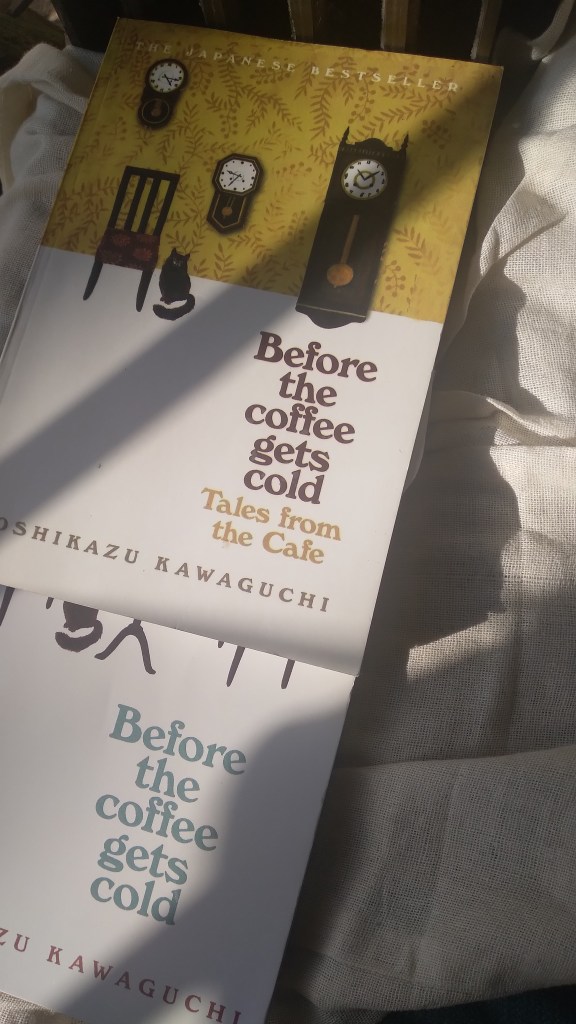
In a small back alley in Tokyo, there is a café which has been serving carefully brewed coffee for more than one hundred years. But this coffee shop offers its customers a unique experience: the chance to travel back in time. In Before the Coffee Gets Cold, we meet four visitors, each of whom is hoping to make use of the café ’s time-travelling offer, in order to: confront the man who left them, receive a letter from their husband whose memory has been taken by early onset Alzheimer’s, to see their sister one last time, and to meet the daughter they never got the chance to know. But the journey into the past does not come without risks: customers must sit in a particular seat, they cannot leave the café, and finally, they must return to the present before the coffee gets cold. A quirky, charming and heartbreaking story about a little coffee shop in Tokyo with a special seat that can send people through time. Before the Coffee Gets Cold was one of my first reads of the month that combined the intense focus of a short story collection with the richness of a classic novel. But it is Kawaguchi ‘s skill to capture the heartbreak of being human that makes it my favourite book of all time.
It is in this pain we learn to pray – a prayer for the temporary nature of our being-ness, and our unknown sorrow,our unimaginable unspoken loss, in the hope of it all the heartache we carry may never be in the forth of us. Painting this picture more beautifully than ever was my second read of the month, ‘Exit West’ by Mohsin Hamid. Exit West is a motion that mirrors that of a planet where millions are trying to slip away “from once fertile plains cracking with dryness, from seaside villages gasping beneath tidal surges, from overcrowded cities and murderous battlefields” . Hamid’s writing—elegant and fluid, with long sentences that encapsulate the myriad contradictions of his characters’ lives—makes Exit West an exhilarating read, but it’s the ideas he expresses and the future he’s bold enough to imagine define it as an unmissable one.

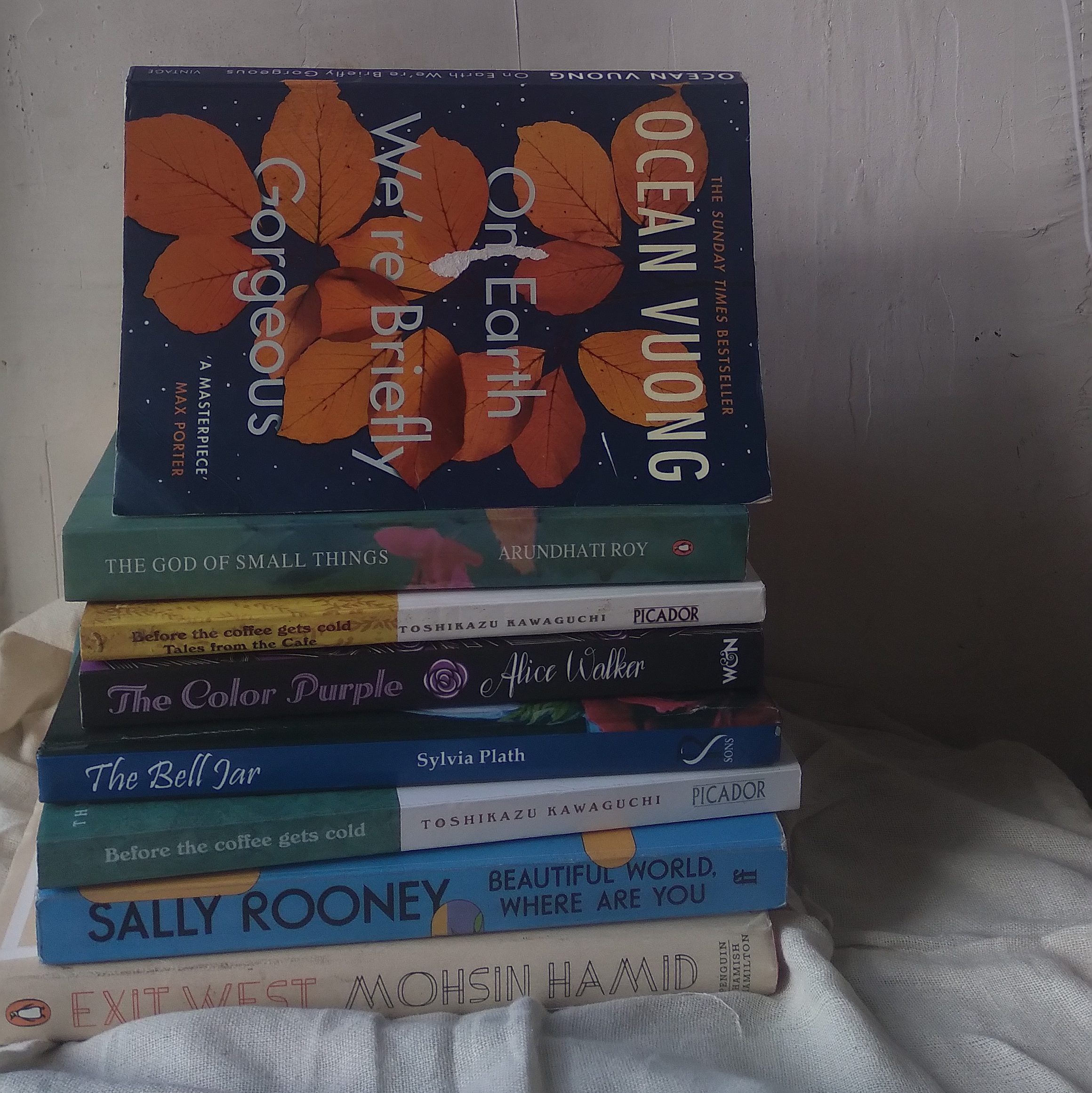
Another unmissable writing is the one of Arundhati Roy.’‘The God of Small Things” opens with memories of a family grieving around a drowned child’s coffin, there are plenty of other intimate horrors still to come, and they compete for the reader’s sympathy with the furious energy of cats in a sack setting the tone for the quality of Ms. Roy’s narration– so extraordinary,at once so morally strenuous and so imaginatively supple — that the reader remains enthralled all the way through to its agonizing finish.This ambitious meditation on the decline and fall of an Indian family is part political fable, part psychological drama, part fairy tale, and it begins at its chronological end, in a landscape of extravagant ruin.
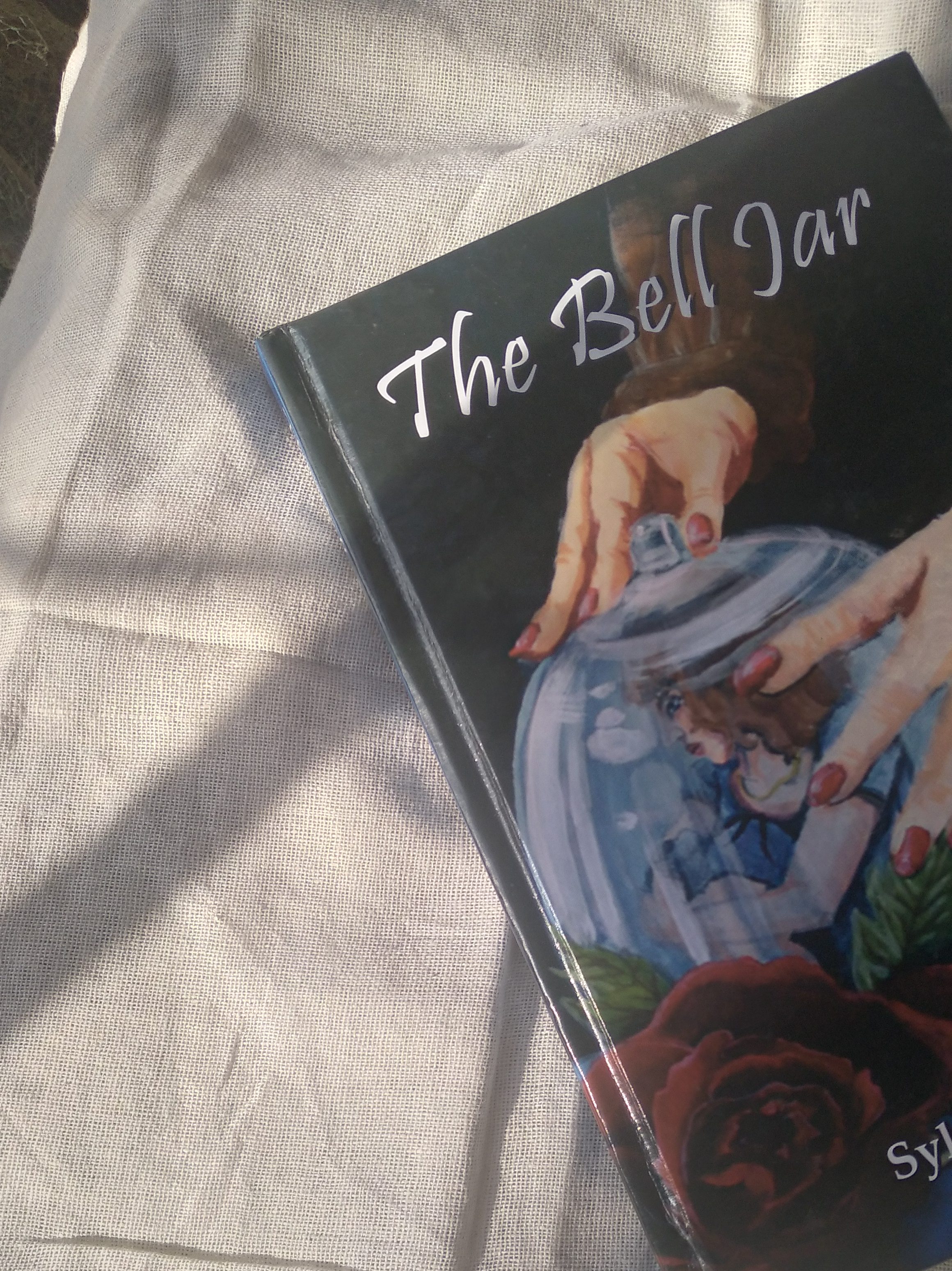
When you look into the mirror and manage to see yourself as a completely separate person, March was to understand that person. The person who feels disconnected from the world and from herself. It is as if being trapped inside the “bell jar” . Written in the early 1960s, and Sylvia Plath’s only full-length prose work, The Bell Jar is a stunning portrayal of a particular time in a person’s life and a brave attempt by Sylvia Plath to face her own demons.It is the question that it leaves you with the most haunting—
With the pressure of euphoria within the passé lifestyle that is treasure to be hunted by rummaging through your demons,what will become of you?
Fighting is just that one aspect but once it’s over, the storm has undone is the light to look past all the buried layers of identities and styles and beliefs and ideas that had adhered themselves to you like a shield and only to find out that you were never lost, no matter the aching pain, the unexplainable sorrow .“On Earth We’re Briefly Gorgeous” was my one of my cherished reads, it is both an immigrant novel and a work of autofiction whilst also stabilizing itself as a epistolary novel, written loosely, as a letter to the narrator’s mother, which she will never read. “Maybe you’ll be a girl and maybe your name will be Rose again,” Vuong evokes a vision of comfort and stability that feels as distant as a fairy tale.
As i wrapped up March with all the lives I’ve led on, i unearthed my Frankenstein, my Dr Jekyll and Mr Hyde. It was in the ruins of my own extravagance, that I found myself once again.
Written by SJA
 THIS IS WHAT I MEAN