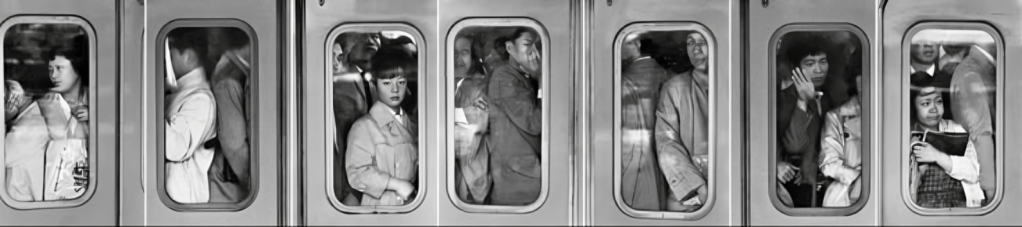
To declare oneself apolitical is not an innocent act of detachment from partisan affairs; it is, rather, a rhetorical camouflage that conceals allegiance to the status quo.
In contemporary socio-political discourse, the term “apolitical” has mutated from a marker of neutrality into a mechanism of disengagement—one that operates not merely as indifference but as complicity. The declaration of being apolitical does not evacuate one from ideological terrain; it merely confirms one’s alignment with dominant paradigms, disguised under the pretense of impartiality. To remain silent is not neutrality—as Lorde insists, “your silence will not protect you,” and perhaps more damningly, it will not protect the ones your silence renders disposable.
Consider the subtle violence embedded in everyday workplace conversations. A heterosexual man speaking against casteism is benignly pragmatic; a Dalit woman doing the same is suddenly accused of politicizing the space. Visibility, when wielded by the minoritized, becomes radical; when performed by the dominant, it is rendered mundane. This cognitive asymmetry is central to the performance of neutrality. The moment one’s existence transgresses normative scripts, they are no longer permitted to be apolitical.
As Laclau and Mouffe argue, political subjectivity is never static. It is constituted through displacement, contestation, and a constant rearticulation of hegemony. In this context, to refuse participation is to deny the very conditions that allow one to emerge as a political subject. The so-called apolitical citizen is not disengaged from politics but disinvested from responsibility. Such postures of detachment are luxuries afforded only to those whose identities are already protected by the architectures of systemic privilege.
Rancière’s theory of disidentification becomes salient here. In his work, politics is not defined by institutional procedures but by interruptions—moments when those excluded from the distribution of the sensible claim visibility. Disidentification, then, is a rupture; a deliberate unmaking of imposed roles. It is the act of the “part who has no part” demanding to be counted. This rejection of assigned passivity is not merely an act of resistance but one of ontological redefinition. It is a reconfiguration of what it means to be seen, to speak, and to matter. In societies like India, where multiplicity is the very grammar of existence, apoliticism becomes a moral fiction. The refusal to interrogate power structures is not innocence; it is intellectual abdication. The plurality of caste, religion, language, and gender renders every act of public engagement saturated with political significance. Even silence in such a milieu becomes a performative utterance—a calculated withdrawal that shores up dominant hierarchies. The politics of identity are not optional for those whose very existence has been politicized.
To exist as queer, Dalit, disabled, indigenous, female, Muslim, or otherwise marked is to be politicized without consent. The apolitical is not universal—it is curated, bordered, and violently exclusive. As a rhetorical gesture, claiming apoliticality functions as an aesthetic of privilege, a posture performatively disengaged from struggle while parasitically benefitting from its fruits. In this sense, apoliticality is not a negation of politics but a refinement of power.
Critical theorists such as Judith Butler have long insisted that subjectivity itself is forged within discursive frames that define what is visible, what is grievable, and what is conceivable. These frames are not static; they are constructed by hegemonic power, policed by institutions, and naturalized through repetition. Butler’s notion of unframing elucidates how identities become sites of resistance by disrupting the interpretative schemas that have long defined them. In this light, the politics of identity is not merely a question of representation but of epistemological survival. To exist openly as queer, Dalit, or disabled is to become a site of politicized existence, regardless of intention.
To claim neutrality in such a terrain is to ignore the uneven distribution of vulnerability. This refusal to see politics as embedded in daily life becomes a form of epistemic violence—a suppression of cognitive dissent. The apolitical individual does not abstain from politics; they abstain from the labor of thought. One must remember: A refusal to choose sides is often just a refusal to see clearly.
To be clear, detachment is not inherently regressive. As Lauren Berlant argues, detachment may be a necessary response to harmful attachments—to ideas, systems, or identities that no longer serve our flourishing. Yet, Berlant also cautions that detachment is rarely pure. It is ambivalent, nonlinear, and complicated by affective entanglements. The desire to detach from a politicized identity is often itself political, reflecting exhaustion rather than indifference. The queer person who disengages from visibility is not apolitical; they are navigating a terrain saturated with risk.
Pop culture frequently mirrors this tension. Consider the character of Katniss Everdeen in The Hunger Games, who begins as an unwilling participant in a spectacle, only to discover that neutrality is an illusion in a totalitarian regime. Her body, her choices, her silences—even her clothing—are politicized. Similarly, in The Handmaid’s Tale, Offred’s passive compliance is read as treachery by some and survival by others, but never as neutrality. These fictions mirror reality’s fundamental paradox: under systems of oppression, apoliticism does not exist—it only masquerades as safety. Moreover, the invocation of apoliticism is often gendered and racialized. Marginalized voices, when they speak, are seen as political—too political—while dominant voices, no matter how ideological, are presumed rational, objective, and universal. This epistemological asymmetry reveals that what is deemed political is often just what is discomforting to dominant sensibilities. If a queer woman references her family, it is read as a political act; if a heterosexual man does the same, it is accepted as quotidian.
The ideological terrain of apoliticism, therefore, is not an empty field. It is cultivated, structured, and heavily policed. Its deployment in workplace cultures, academic institutions, and media spaces functions to suppress dissent, discredit activism, and reward docility. In the name of professionalism, we are instructed to amputate our convictions. In the name of civility, we are asked to silence our pain. We must ask: who benefits from this selective censorship? Who thrives when critical thinking is replaced by cultivated forgetfulness?
To be political, in the truest sense, begins where self-interrogation becomes unavoidable—where one resists the seduction of alignment and confronts the conditions that have shaped them. It is to resist epistemic sedation and to practice radical attentiveness to the structures that shape thought itself. A truly apolitical person, if they exist at all, is either profoundly sheltered or willfully complicit. In either case, to name oneself apolitical in a burning house is not pacifism—it is moral cowardice.
Political engagement is neither a spontaneous act nor a mere byproduct of being marginalized; it is meticulously forged in the crucible of early psychosocial experience. The foundational satisfaction of autonomy, competence, and relatedness is not a trivial precursor but the sine qua non of democratic participation (Ryan & Deci, 2017). Those who claim apolitical detachment do not embody principled neutrality; they exhibit a retreat into psychological comfort zones, a calculated refusal to bear the burdens of civic responsibility.
To detach is often to abdicate—to forsake the indispensable labor of sustaining democracy under the guise of disengagement.
The burden of political expression weighs unevenly, and nowhere is this more vivid than in the lived realities of women from marginalized communities. Take Nabiya Khan, a Muslim poet and activist whose image was callously weaponized in the “Sulli Deals” app—a grotesque project by Hindu right-wing extremists auctioning photographs of Muslim women online under a hateful slur. This was not merely an attack on bodies; it was an erasure of identity, a violent assertion that Muslim women’s very existence is a site of political contestation.
For Nabiya and countless others, apolitical detachment is an impossibility. Their lives are forcibly politicized through state and societal violence, religious bigotry, and racialized misogyny. Meanwhile, many men from dominant communities glide through public and private spaces under the guise of neutrality, their disengagement an exercise of privilege rather than conviction. Some sleep with one eye open on a besieged street; others dine beneath chandeliers that never notice the rain.
Self-determination theory (SDT) offers a compelling lens through which to examine these underpinnings. It posits that human beings universally strive to satisfy three basic psychological needs: autonomy, competence, and relatedness (Ryan & Deci, 2017). These needs function as essential nutrients for healthy psychosocial development and, intriguingly, overlap with correlates of political engagement—such as educational attainment, economic stability, and mental well-being.
When these needs are fulfilled within childhood environments—particularly via need-supportive parenting that exposes children to political discourse—there is a heightened likelihood of fostering intrinsic political motivation and internalization of democratic norms. Political participation, therefore, is less a discrete skill than an extension of early life experiences of autonomy and connectedness. To frame this more vividly, consider political engagement as a garden that requires fertile soil, consistent watering, and sunlight. Need satisfaction is the soil’s richness; exposure to political norms and parental example are the water and light. Without these, even the most promising seedlings of civic curiosity wither in neglect. Holistic approaches that extend beyond civic education to nurture psychological needs thus hold transformative potential in remedying youth disengagement.
The illusion of neutrality, much like the so-called “neutral friend,” is a façade of moral detachment that thinly veils abdication. Empirical evidence decisively repudiates the notion that neutrality fosters harmony; rather, it breeds distrust equivalent to outright antagonism (Journal of Experimental Social Psychology).
Neutrality is not an ethical refuge but a tacit complicity with injustice, a refusal to challenge the structures that perpetuate inequity. An apolitical posture is not a beacon of impartiality but a surrender to inertia.
Hypocrisy, while equally corrosive, signals a distorted engagement rather than a total renunciation. Political actors habitually manipulate moral discourse to camouflage self-interest, engendering cynicism that fractures democratic trust (Drefcinski, 2003; Furia, 2009). Hypocrisy thrives on performative gestures that maintain the semblance of contestation. Yet this superficial engagement, however flawed, affirms the terrain of politics as unavoidable. In stark contrast, apolitical disengagement repudiates the political sphere itself, retreating behind a veneer of disinterest.Voter disengagement often correlates strongly with disillusionment stemming from moral duplicity in leadership. Disengagement manifests in abstention, protest votes, or alienation from partisan identities, thereby undermining democratic vitality. It is crucial, therefore, to differentiate this disengagement, born of distrust, from genuine apolitical thought.
Apoliticism itself is complex and historically multifaceted. Philosophical traditions like Epicureanism advocated withdrawal from politics not from indifference but to preserve tranquility amid societal tumult. Their withdrawal was pragmatic, conditional, and ultimately self-preservational rather than absolute disengagement. Similarly, Anabaptist sects emerged with principled separations from the state, prioritizing spiritual autonomy and community integrity over political involvement. Their apolitical stance was neither passive nor neutral; it was a deliberate ethical repudiation of the coercive intertwining of religion and state (Schleitheim Confession, 1527).
Historical precedents such as the Epicurean withdrawal or Anabaptist separation demonstrate that apolitical stances are less about detachment from politics and more about selective privilege and evasion. Such withdrawal is a refuge afforded by comfort or a symptom of alienation, never an expression of ethical courage.
To proclaim apoliticism in a world where identities and rights are persistently politicized is an act of willful blindness. Politics is not a realm one opts into or out of—it is the air we breathe, shaped by power, exclusion, and contestation. To adopt an apolitical stance is to deny the political realities embedded in social existence, to erase the struggles of those who live their identities under constant scrutiny.
It is a silent endorsement of existing hierarchies and injustices, the quiet that allows oppression to metastasize. The so-called “neutral” citizen thus becomes an unwitting accomplice to systemic hypocrisy. Psychologically, apolitical detachment reveals a troubling deficiency—a rejection of the cognitive demands and normative commitments necessary for democratic vitality. Without cultivating political curiosity or internalizing democratic norms, disengagement risks breeding passivity and susceptibility to authoritarianism. The stability of political communities depends on active, informed participation; apoliticism undermines this foundation.(Ryan & Deci, 2017). Without active cultivation of political curiosity and norm internalization, societies risk breeding a citizenry that is vulnerable to manipulation, apathy, and authoritarian impulses.
It is imperative, therefore, to distinguish apolitical detachment from political hypocrisy. While hypocrisy represents a distorted engagement marked by duplicity and self-interest, apolitical disengagement is often a refusal to engage altogether—a repudiation of democracy’s demands cloaked in neutrality. Both are detrimental, but the latter is the more insidious threat to democratic futures because it undermines the very premise of collective responsibility.
Why is apolitical disengagement—an abdication of democratic responsibility under the guise of neutrality—more than just neutrality? Because claiming neutrality often masks an abdication of democratic responsibility, weakening the very foundations of collective decision-making and allowing injustices to persist unchecked. George Orwell warned that doublethink—the ability to hold contradictory beliefs—enables this dangerous passivity, especially in education, where sanitized curricula erase uncomfortable truths and discourage critical thought. If disengagement threatens democracy, then understanding where responsibility lies becomes urgent.
Education is never neutral—it is inherently ethical and political, shaped by the power dynamics surrounding it. This demands more than agreement; it requires action. Recognizing education’s political nature means teachers must consider students not as empty vessels, but as whole individuals shaped by complex life circumstances both inside and outside the classroom. The contemporary classroom environment, often saturated with an unrelenting barrage of stimuli and fragmented information, paradoxically cultivates both cognitive overload and disengagement. Rather than fostering critical reflection, this incessant bombardment desensitizes students to complex social realities, breeding a form of intellectual apathy masquerading as neutrality. For example, when history textbooks omit or sanitize controversial events like colonialism or caste discrimination to avoid “offending” any group, students lose the chance to grapple with uncomfortable truths, leaving them ill-prepared to engage with real-world inequalities.
When educational spaces prioritize rote learning or surface-level exposure over meaningful inquiry and psychosocial nourishment, they fail to equip individuals with the psychological resilience necessary to confront political issues. The consequence is a generation increasingly inclined toward withdrawal or superficial engagement, mistaking detachment for impartiality.
Political apathy, in this context, emerges not from a principled refusal but from an exhausted psyche overwhelmed by overstimulation and deficient in foundational support for autonomy, competence, and relatedness. Indian universities, especially the central institutions like Jawaharlal Nehru University, Jamia Millia Islamia, and Aligarh Muslim University, have historically been sites of fulfilling the psychological needs identified by Self-Determination Theory—autonomy, competence, and relatedness—thereby serving as essential incubators for political engagement and democratic participation. These institutions are more than mere centers of knowledge transfer; they provide the fertile ground where The personal inevitably becomes political, as students collectively grapple with social justice issues, inequality, and national identity. These experiences translate into intrinsic motivation to participate in politics beyond mere electoral processes, embedding democratic norms into the very fabric of student identity.
Autonomy is fostered as students encounter diverse perspectives, challenge established narratives, and learn to think critically rather than absorb rote information. Competence is built through rigorous academic programs that demand intellectual discipline, research skills, and effective communication. Relatedness emerges from the rich social tapestry of campus life, where students from varied backgrounds interact, debate, and collaborate, forming networks of solidarity and empathy. This triad of psychological nourishment is vital because it echoes the conditions under which early political motivation takes root, extending the foundations laid in childhood into young adulthood.
Yet, constant exposure to a relentless stream of crises—wars, inequality, environmental collapse—can overwhelm the mind, triggering a psychological defense mechanism: apoliticism as strategic blindness. When injustice becomes a persistent background noise, the brain numbs itself to avoid burnout, mistaking disengagement for neutrality. Privilege acts as a buffer in this process. For those whose lives remain insulated from these crises, the urgency fades into distant static. Social and political upheavals lose their immediate impact, becoming abstract problems rather than lived realities. This distance breeds dissonance—a detachment where the suffering of others feels irrelevant, enabling apolitical attitudes to flourish not out of ignorance, but as a shield against discomfort.
Desensitization to constant crises, especially when buffered by privilege, often leads to a form of pseudo-intellectualism that masks itself as thoughtful disengagement. Platforms like Jubilee’s “Middle Ground” illustrate this tendency by packaging political and social conflicts into bite-sized, entertainment-driven dialogues that rarely capture the nuance or urgency of the issues at hand. These conversations, framed as balanced or empathetic, often fail to move beyond superficial exchanges, leaving viewers with the illusion of understanding while avoiding deeper critical engagement. This phenomenon reflects a broader cultural trend where complex realities are flattened into black-and-white binaries, easily consumable but ultimately disengaging.
Privilege plays a critical role here—when political crises or injustices do not affect one’s immediate surroundings, they risk becoming abstract concepts rather than lived experiences. This distancing fosters a dangerous psychological buffer, allowing individuals to adopt an apolitical stance not from ignorance but from a comfortable detachment. The media’s amplification of misinformation during events like the India-Pakistan conflict further complicates this landscape. Trusted news outlets, caught in a race for sensationalism, propagate unverified or false narratives, which fuel polarization and confusion instead of informed dialogue. The interplay between privileged detachment, media spectacle, and pseudo-intellectualism thus cultivates a political environment where serious issues are reduced to performative discourse. This erodes genuine democratic engagement, as the veneer of thoughtful conversation conceals an abdication of responsibility—turning critical thought into mere consumption and silencing the urgency that true political participation demands.
Urban Indians often view politics as beneath them—a game for the poor and dependent. In our gleaming offices, claiming to be apolitical feels like a mark of sophistication, a badge of being “above” the messy fray. Yet everything is political: art, films, even the very air we breathe. To deny this in the largest democracy is less wisdom and more willful blindness, like an ostrich burying its head while the world demands attention. Why do so many avoid politics? Is it fear—fear of confronting contradictions, of sitting with uncomfortable ambiguity, or facing nuances that defy neat answers? The cultural craving for simple, black-and-white truths leaves no room for the messy realities of political life. Instead, apoliticism becomes a refuge from cognitive dissonance, a quiet surrender to cowardice cloaked as neutrality.
For example, the widespread apolitical attitude in India’s urban middle class often coexists with silence or indifference toward systemic issues like communal violence or caste discrimination—problems deeply political yet ignored because acknowledging them threatens comfortable identities. Meanwhile, religious supremacy movements thrive in these vacuums, consolidating power precisely because many citizens choose disengagement over confrontation. This disengagement also opens the door for anti-democratic practices like voter manipulation and electoral fraud; apolitical citizens provide little resistance when their democratic rights are subverted.
This refusal to grapple with complexity feeds the cult of “both sides”—a false equivalence that collapses judgment into paralysis. It demands equal weight to all opinions, regardless of evidence or ethics, as if complexity can be solved by a forced balance. The result? A disengaged citizenry, poor voter turnout, and a deafening silence in moments that demand collective action. When silence becomes the default, the spaces are left open for those who wield religious supremacy and identity politics as tools for privilege, fueling conflicts that thrive on this very cowardice. Apoliticism is not neutrality; it is abdication—a failure to reckon with the messy, urgent realities that define democracy.
Understanding any issue requires seeing who holds power, how it’s used, and who pays the price. Power isn’t abstract—it’s rooted in institutions, corporations, media, and the economy, enforced through laws, military force, and control of information and resources. The left must cut through disinformation and dominant narratives that hide state violence and exploitation. Critical thinking means constantly questioning these power structures and challenging the systems—whether corporate, military, or capitalist—that concentrate control in the hands of a few while oppressing the many.
It begins with noticing what we’re taught not to question and daring to ask why.
But recognizing power is not enough; we must also confront the internal barriers that prevent us from acting effectively—chief among them, dogma.
Dogma—whether ideological, religious, or theoretical—cripples our capacity for critical thought and meaningful action. When rigid beliefs become non-negotiable, they obscure the nuanced realities that demand flexibility and adaptation. The left, too often trapped in inflexible ideological camps, risks weakening its movements by refusing to engage with evolving struggles or new forms of oppression. This dogmatic rigidity turns vibrant movements into mere purity tests, where loyalty trumps reflection, and dissent within the ranks is seen as betrayal rather than growth.
A particularly corrosive form of this is campism—the blind defense of states deemed “anti-imperialist” even when they commit atrocities. The dangerous binary of the “axis of resistance” vs. the “axis of genocide” turns geopolitical alignment into moral absolution, excusing oppression so long as it is committed by the “right” side. This selective solidarity ignores a basic truth: states, by nature, defend power, not liberation, and will readily oppress at home while posturing against foreign adversaries. In practice, this ideological blind spot leads to genocide denialism within the left, where massacres are downplayed or justified so long as they’re committed by a regime positioned against Western hegemony. Dialectical materialism, meant to illuminate material realities—class, caste, race, gender, power relations—is often twisted into a weapon for defending dogma. Instead of exposing contradictions, it gets deployed to conceal them, protecting favored regimes from criticism. But dialectical materialism is a method, not a shield. It demands we look unflinchingly at reality as it is, even when that reality indicts our allies or unsettles our ideological comfort. Anything less turns it into a parody of itself—a justification for power rather than a challenge to it.
The decay of critical thinking doesn’t just happen in ideological echo chambers. It thrives in the comfortable apolitical stance of privilege, where politics is dismissed as “messy” or “divisive.” Many who refuse to post about injustice claim moral high ground in their silence, yet are equally absent from any offline work for change. This is not neutrality—it’s disengagement masquerading as principle. Weimar Germany offers a grim reminder: educated elites dismissed political urgency as hysteria, abstained from action, and watched as authoritarianism consolidated power. Reactionaries and the apolitical alike fall prey to the same trap: letting those in power dictate the boundaries of discourse. Governments, corporations, and media manufacture distractions—culture wars, surface-level debates, and binaries designed to sap attention from systemic issues. Emotional outrage becomes the currency, and critical thought is bypassed in favor of knee-jerk allegiance to one side or the other.
The state, far from being a neutral arbiter, is the chief architect of social hierarchies, wielding laws, police, surveillance, and courts to defend dominant classes. Its role in upholding capitalism, sustaining old elites, and creating new loyal ones is not an accident—it is its purpose. And when capitalism reaches its breaking points, fascism emerges not as a freak occurrence but as a calculated strategy to suppress dissent and scapegoat the marginalized. Disinformation is the lubricant in this machinery. It doesn’t just mislead—it’s designed to fracture solidarity, manufacture confusion, and keep people from recognizing the real architecture of oppression. Fighting it requires more than fact-checking; it means asking why the lie exists, who benefits from it, and what truth it’s meant to bury.
Critical thinking, then, is not an academic pastime—it’s a radical act. It is the refusal to accept both the comfortable myths of privilege and the suffocating dogmas of ideological camps. Apolitics is not a shield from the world; it is slow intellectual atrophy, the surrender of our ability to see clearly and act decisively. And when that skill dies, justice doesn’t simply stall—it retreats, making way for authoritarian “order” to fill the vacuum. The question is not whether politics will shape your life, but whether you will let it happen without your consent.
This apolitical posture, born of privilege and fear, is a fragile illusion. It signals not just disengagement but the death of critical thinking—the very skill needed to question power and imagine alternatives.Today’s self-proclaimed “above it all” citizens sneer at posting about injustice, as if their inaction in private redeems their absence in public. This quiet is a brittle veil, barely hiding the cracks where compassion once lived. What some call “Not Doing politics” is often just the slow decay of compassion beneath the weight of privilege. I could soothe my conscience with silence—protected as I am—but I know women whose mornings are haunted by storms I cannot imagine and I will not meet their gaze as a spectator. I see how close I stand to their side, how one twist of fate could cast me into their shadows. If this tide of injustice keeps rising, it will swallow me whole—abandoning what little claim I have to humanity. Solidarity is not charity—it is the bare minimum the living owe the suffering.
So when widespread disengagement does kills critical thought, and shrink the space for justice. And authoritarianism advances not with a roar but with same quiet, comfortable indifference.
And your refuge of apoliticism collapses; will you awaken to a future you chose by refusing to choose?
 THIS IS WHAT I MEAN